VIDEO 01
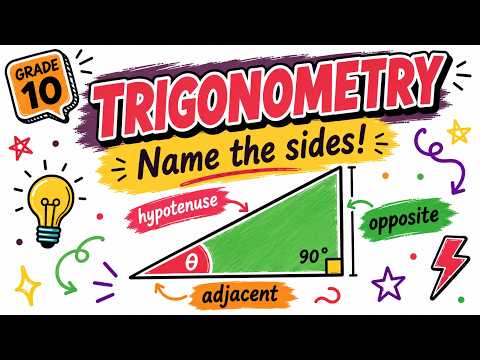
Introduction to Trigonometry | Naming the Sides of a Right-Angled Triangle | Grade 10 CAPS Math
Learn how to identify the hypotenuse, opposite side and adjacent side in a right-angled triangle relative to the angle under consideration.

Start Ahead. Stay Ahead.
Start Ahead. Stay Ahead.
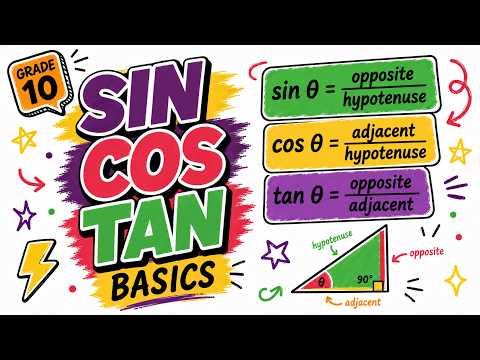
Learn how to use trigonometric ratios to determine sides and angles and solve trigonometric equations.
Choose a video lesson to watch on YouTube.
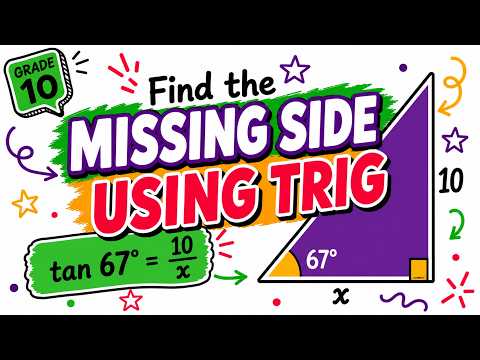
Learn how to calculate a missing side in a right-angled triangle by choosing the correct sine, cosine or tangent ratio using SOHCAHTOA.
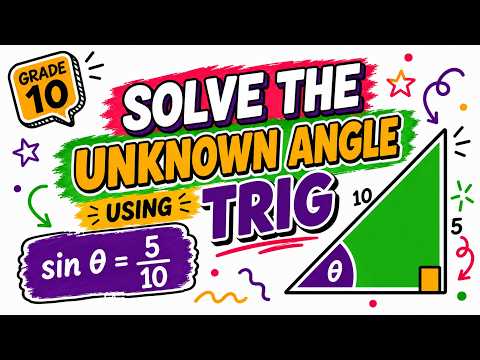
Learn how to calculate an unknown angle in a right-angled triangle using inverse sine, cosine or tangent.
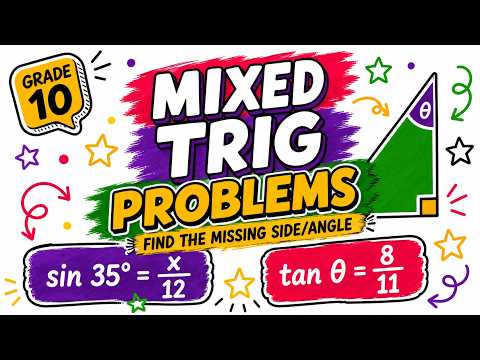
Practise mixed right-angled triangle problems where you must decide whether to find a missing side or angle and choose the correct trig ratio.
Choose a video lesson to watch on YouTube.
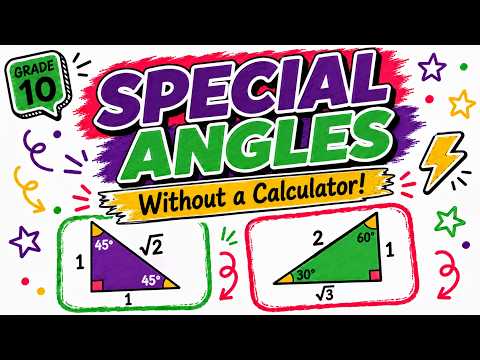
Learn how to use the 45° and 30°–60° special triangles to find exact sin, cos and tan values without a calculator, including the values at 0° and 90°.
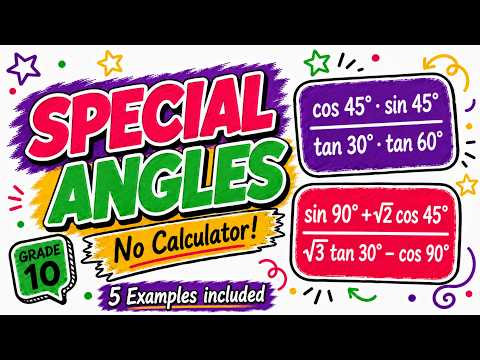
Practise solving special-angle trigonometry questions without a calculator using exact values for sine, cosine and tangent at 30°, 45°, 60° and 90°.
Choose a video lesson to watch on YouTube.
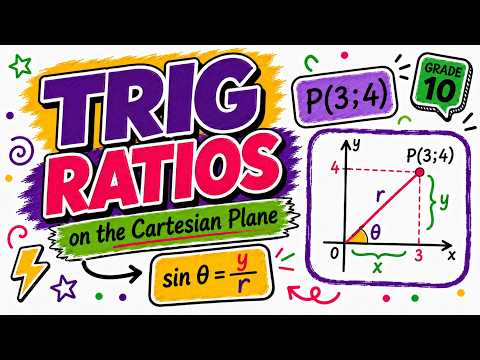
Learn how to calculate trigonometric ratios on the Cartesian plane using x, y and r and form right-angled triangles from points in different quadrants.
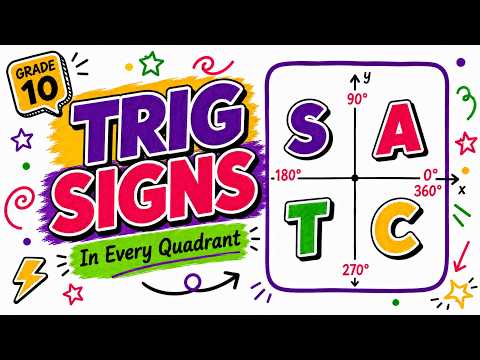
Learn how the CAST diagram shows whether sine, cosine and tangent are positive or negative in each quadrant.
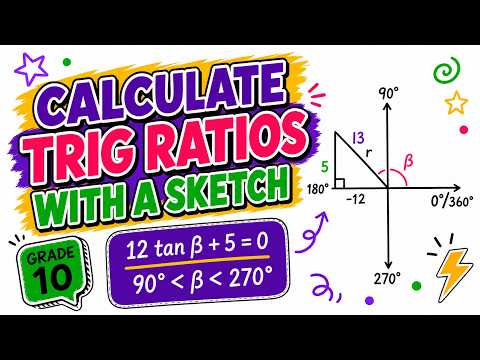
Learn how to use a given trig ratio, angle interval and quadrant signs to draw a sketch, find missing values with Pythagoras and determine sin, cos and tan without a calculator.
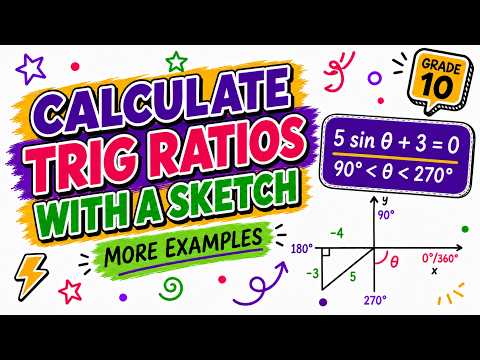
In this Grade 10 CAPS Maths lesson, we work through more examples of calculating trigonometric ratios using a sketch. Learn how to identify the correct quadrant, draw the triangle, find missing values, and calculate expressions using sin, cos and tan.
Choose a video lesson to watch on YouTube.
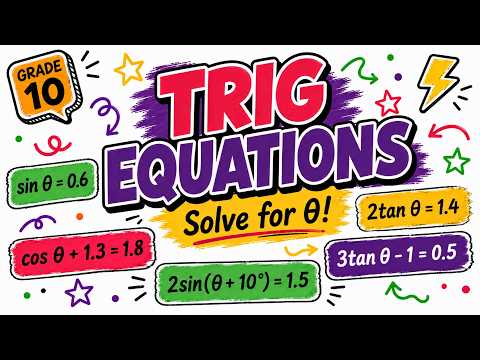
Learn how to solve basic trigonometric equations step by step by isolating the trig expression, using inverse trig functions and solving for the angle.
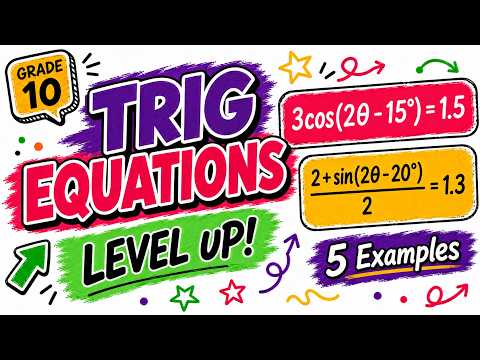
Take your trigonometric equation skills to the next level with five more challenging Grade 10 examples involving 2θ, brackets, fractions and multiple algebraic steps.
Choose a video lesson to watch on YouTube.
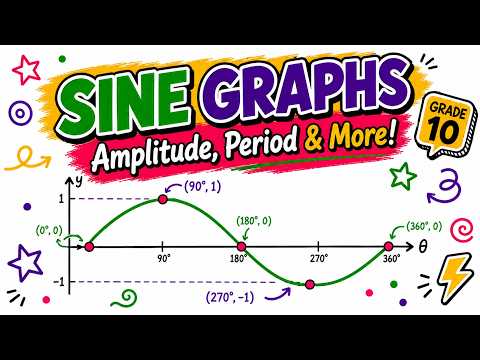
Learn how to draw the basic sine graph y = sin θ from 0° to 360° and understand its key properties, including domain, range, amplitude and period.
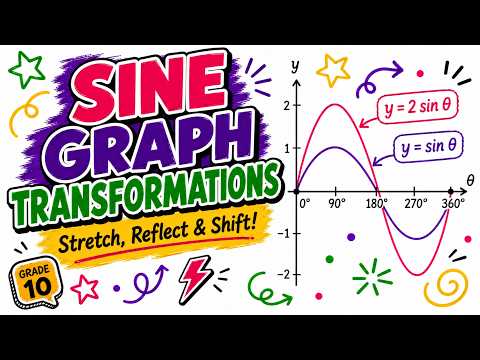
Learn how to transform sine graphs by stretching, reflecting and shifting them. See how a and q affect the graph, amplitude, range, maximum and minimum values.
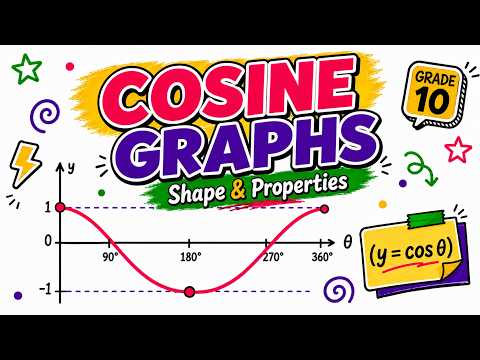
Learn how to draw the basic cosine graph y = cos θ from 0° to 360° and understand its key properties, including domain, range, amplitude and period.
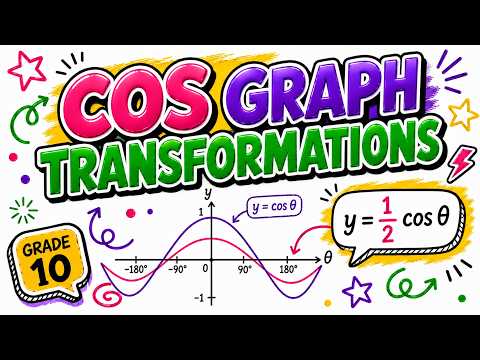
Learn how to transform cosine graphs by stretching, reflecting and shifting them. See how a and q affect the graph, amplitude, range, maximum and minimum values.
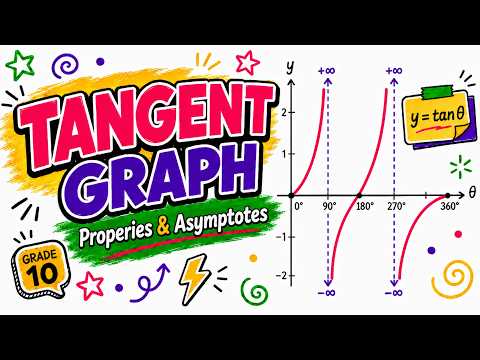
Learn how to draw the basic tangent graph y = tan θ and understand its key properties, including its asymptotes, domain, range and period.
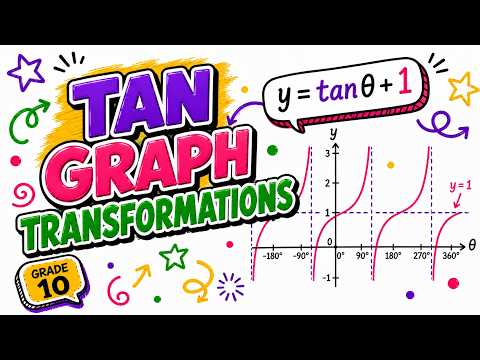
Learn how to transform tangent graphs using a and q. See how tangent graphs stretch, compress, reflect and shift vertically, and how these changes affect the graph.
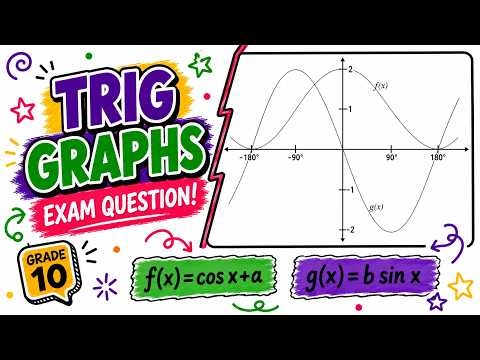
Work through a Grade 10 trigonometric graphs exam question step by step and practise interpreting sine and cosine graphs, determining graph properties and answering typical exam questions.
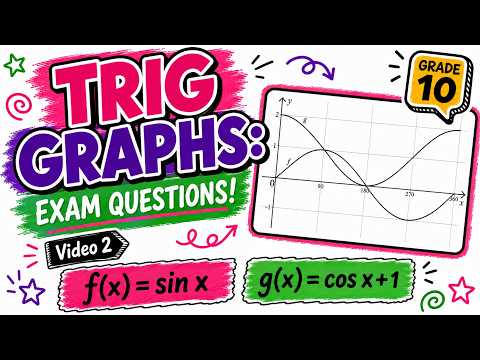
Work through Question 6 from the November 2022 Gauteng Grade 10 exam paper. Learn how to determine amplitude and range, compare trig graphs and answer graph-based trigonometry questions.
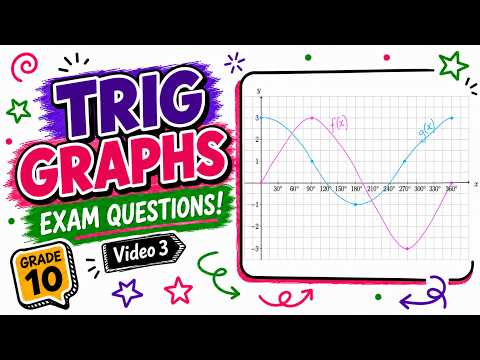
Work through a real Grade 10 trig graphs exam question involving f(x)=3sinx and g(x)=2cosx+1. Learn how to sketch both graphs, find amplitude and period, and use the graphs to solve equations and inequalities.
Choose a video lesson to watch on YouTube.
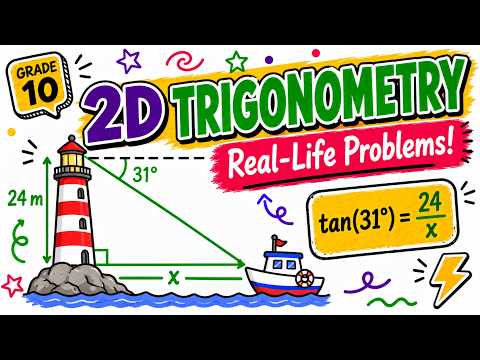
Learn how to solve 2D trigonometry problems using right-angled triangles, angles of elevation and depression, and the correct trig ratio in real-life applications.
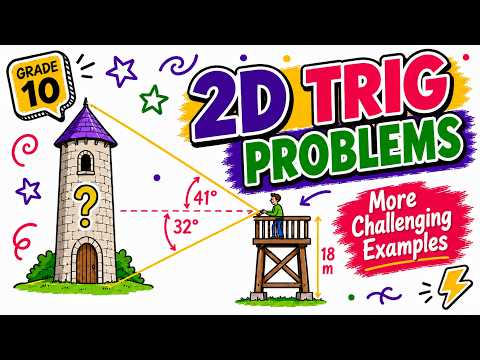
Learn how to solve more challenging 2D trigonometry problems step by step by breaking complex diagrams into smaller right-angled triangles and using angles of elevation and depression.